Yorkshire Wildlife Park is celebrating the birth of rare Giant Otter
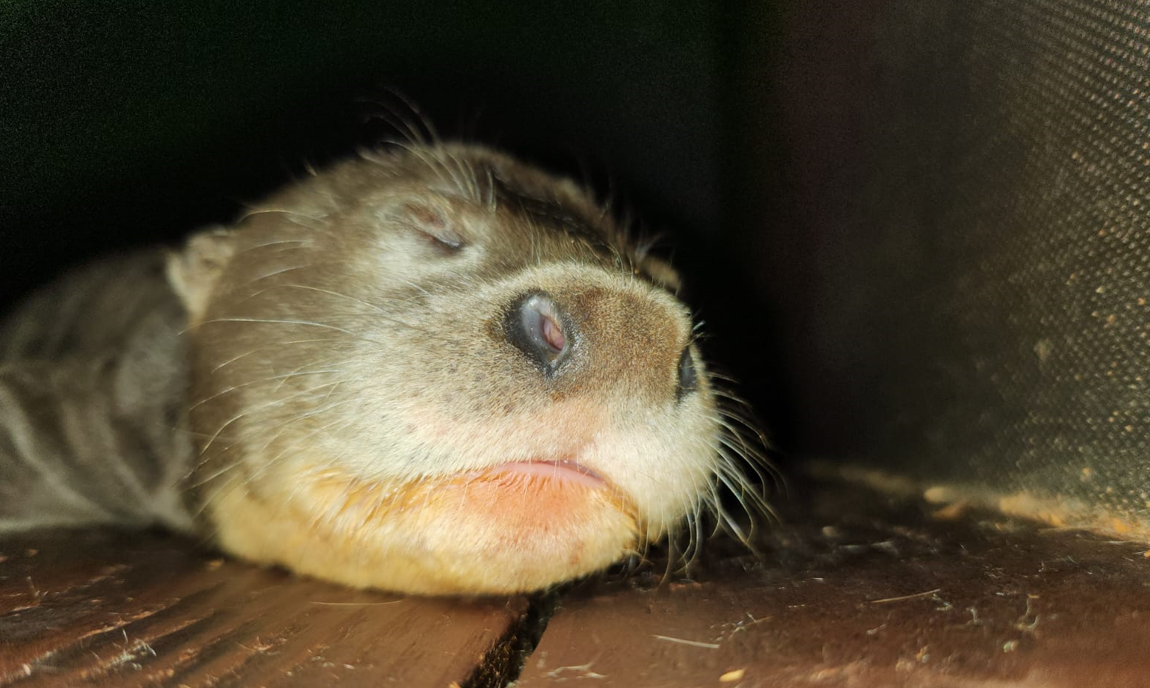
Posted: 15th February, 2024Yorkshire Wildlife Park is celebrating yet another addition to their growing number of resident rare Giant Otters.
The pup, born in November, is now regularly venturing out to explore its new environment. Whilst the weather isn’t quite warm enough to brave the outdoor lake, visitors have seen young Mateo playing with his siblings in the indoor pool through the viewing window.
Mateo has joined an already busy family: mum Alexandra has her hands full after giving birth last April. Dad Orimar and eldest sibling Bonita continue to show their collaborative efforts by looking after the youngest additions.
"We are so excited by the expansion of our Giant Otter family," says Animal Director Dr Charlotte McDonald. "Alexandra and Orimar are fantastic parents, and the perfect reflection of Yorkshire Wildlife Park’s commitment to global conservation efforts. We hope that the birth of this pup will continue to inspire others to learn more about this precious species, and the important role that they play in the ecosystem."
Mateo, along with the rest of the Giant Otter family, can be visited at Yorkshire Wildlife’s Park Giant Otter reserve, a purpose-built habitat consisting of a natural lake, grassy embankments and specially adapted climate controlled house.
Giant Otters are the longest of the Otter species, reaching 1.6 metres when fully grown. Their size means Giant Otters can consume up to 4 kilograms of fish per day.
Originating from South America, the species numbers are critically low: despite reduced hunting allowing for a steady grow of species numbers, it is believed that Giant Otters have lost around 70% of their South American population range within the last decade. YWP continues to support the conservation of endangered species of animal, such as the Giant Otter.
The park partners closely with the Wildlife Foundation, an animal welfare charity based at YWP. The Wildlife Foundation works with around the world to improve the welfare of animals in zoos and in the wild, and to promote the conservation of wildlife in their natural habitat and in captivity.
Related Members
-
News
.png?w=100&h=100&zc=1&f=jpeg&hash=d8c1f53f2c350a047de7b916ca514ca3) BIAZA Photo Competition 2026 - the winners! 13th August, 2026The wait is over! BIAZA (The British and Irish Association of Zoos and Aquariums) has announced the winners of its annual photo competition, highlighting…
BIAZA Photo Competition 2026 - the winners! 13th August, 2026The wait is over! BIAZA (The British and Irish Association of Zoos and Aquariums) has announced the winners of its annual photo competition, highlighting… -
News
.png?w=100&h=100&zc=1&f=jpeg&hash=326487f1d57ac0eab876b8e79d153670) Accessibility on a Budget: what we've learned at Shaldon Wildlife Trust 11th August, 2026As the zoo which won the 2026 BIAZA Accessibility in Action Award (in partnership with Agility Marketing) Shaldon Wildlife Trust’s Anna Cowen-Hubbard…
Accessibility on a Budget: what we've learned at Shaldon Wildlife Trust 11th August, 2026As the zoo which won the 2026 BIAZA Accessibility in Action Award (in partnership with Agility Marketing) Shaldon Wildlife Trust’s Anna Cowen-Hubbard… -
News
.png?w=100&h=100&zc=1&f=jpeg&hash=b980abd5e6f56a95d9119ccc5a64b796) Thriving Together: Animal Welfare Assessment Across BIAZA Organisations 6th August, 2026In this week's blog, the BIAZA Animal Welfare Working Group details how welfare assessments benefit not only the animal, but staff and organisations…
Thriving Together: Animal Welfare Assessment Across BIAZA Organisations 6th August, 2026In this week's blog, the BIAZA Animal Welfare Working Group details how welfare assessments benefit not only the animal, but staff and organisations…