
Real hoot of a success with over one hundred Somerset nest boxes
Posted: 29th November, 2021Keepers at Noah’s Ark Zoo Farm have found promising signs that their one hundred nest boxes are providing habitats for native wildlife.
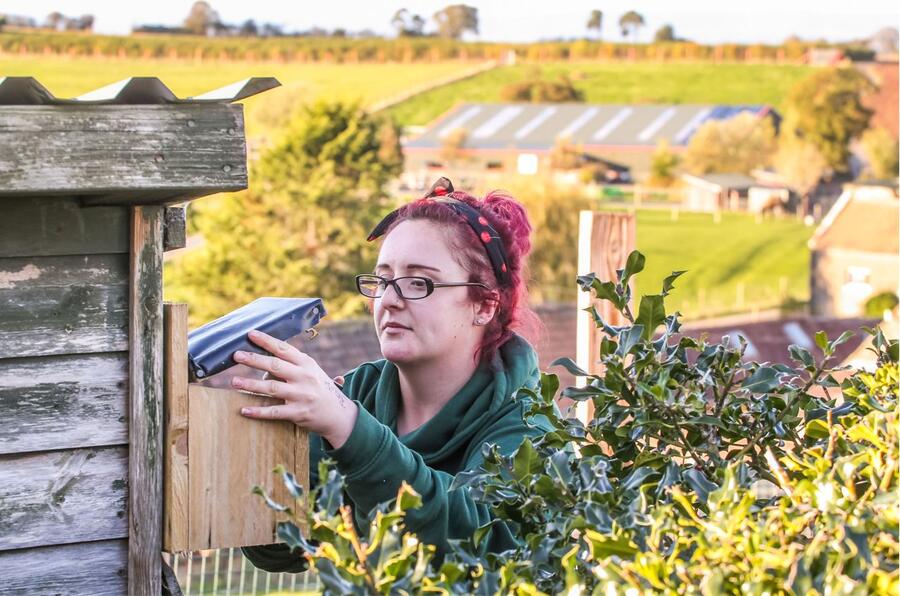
Earlier in the year, Keepers from across the zoo came together to build the nest boxes to help provide habitats for the area’s local native wildlife.
Using repurposed offcuts from the zoo’s construction projects, these nest boxes were placed in various locations throughout the acres of Somerset countryside that the zoo is built upon. Located within the dense surrounding woodland areas to adorning the wallaby house and even near to the big zoo animals such as the elephants.
They are often easily spotted by guests visiting the zoo and often, native wildlife can be seen using certain boxes.
“It’s been a great team effort in building, monitoring, and caring for these nest boxes around the zoo. We are entering a time of inspection and cleaning, ready and hopeful for another promising year of activity.” Said Chris Wilkinson, Curator at Noah’s Ark Zoo Farm
It has been a varied but hopeful success rate at the zoo, with all animal teams inspecting and reporting on what’s been found in their designated nest boxes. Some boxes produced spiders and cobwebs and others have fantastic evidence of nesting activity including one that’s believed to be a wren’s nest.
Noah’s Ark is also home to a wonderful range of native wildlife species, from long-eared bats, frogs, hares, and deer to kestrels and even barn owls. The team at the zoo are hopeful to see sparrows, robins, blue tits, and wrens call these nest boxes home.
“We’re particularly proud to be home to so many different British wildlife species. It’s not uncommon here during your day-to-day work to be reminded of native animals. I’ve previously even had an encounter where I’ve seen a nearby flying barn owl whilst checking our boxes. It’s truly incredible to see.” Chris continued.
The one hundred nest boxes are part of the green zoo initiative by the zoo to help with a sustainable future. Over the years, many trees have been added to the zoo including the 15,000 beech trees that form the Great British Wildlife Maze. Trimmings from this even provide silage for the zoo’s browsing animals.
There’s also a huge conservation area that sits within the zoo for native wildlife to thrive within including a Butterfly meadow and large pond to respectively encourage habitats for insects and amphibians.
Related Members
-
News
 The Deep Named Which? Recommended Provider for Wildlife Attractions 5th June, 2027The Deep has been awarded Which? Recommended Provider status in the prestigious ‘UK’s best wildlife attractions’ category. Over…
 -
News
 BIAZA Awards 2026 - The Winners! 15th June, 2026Each year, we recognise the achievements of BIAZA member zoos and aquariums across a wide range of categories in the BIAZA Annual Awards. Compiled below…
 -
News
.png?w=100&h=100&zc=1&f=jpeg&hash=879c4435c3898f30168e9dfa79a83726) Conservation charity defies odds with rare lemur quadruplets 5th June, 2026Shaldon Wildlife Trust is celebrating an extraordinary "baby boom" following the birth of four critically endangered red-ruffed lemurs. The…
Conservation charity defies odds with rare lemur quadruplets 5th June, 2026Shaldon Wildlife Trust is celebrating an extraordinary "baby boom" following the birth of four critically endangered red-ruffed lemurs. The…