
Kitten births in the wild signal hope for Critically Endangered wildcats
Posted: 27th June, 2024Wildlife conservationists have announced the birth of wildcat kittens in the Cairngorms National Park.
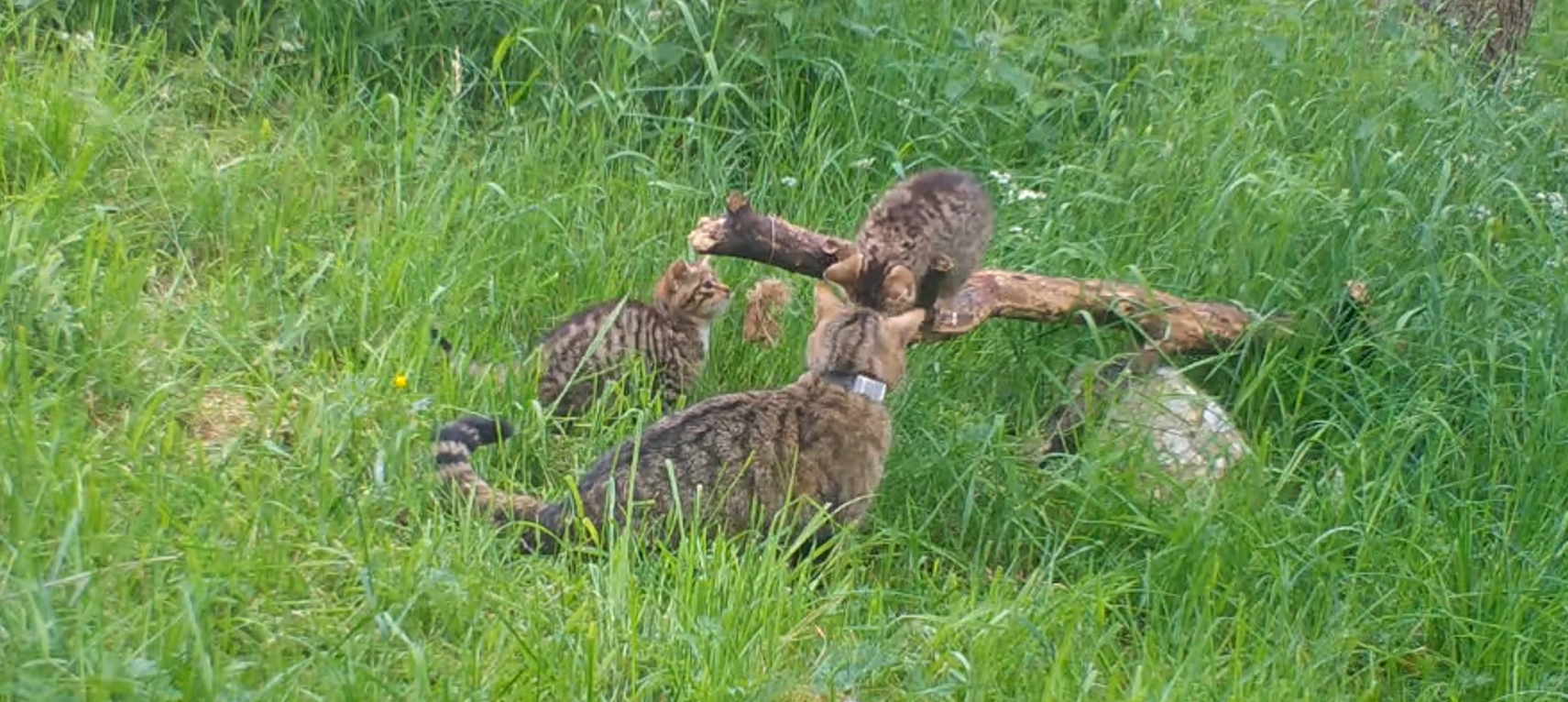
Following the release of 19 wildcats last summer by the Saving Wildcats partnership, led by the Royal Zoological Society of Scotland, at least two females have given birth in the wild. This marks a significant milestone in the project’s efforts to restore the wildcat to Scotland, after the species was determined to be on the verge of extinction in 2018.
Dr Keri Langridge, Saving Wildcats Field Manager, said,
“We suspected that some of the females had given birth when their movement and activity changed very suddenly but didn’t know for sure until footage of the kittens was captured on our cameras.
“With the support of local landowners, gamekeepers and the local community, our field team has successfully managed to monitor and film these kittens in the wild – which is no simple task. We have taken extreme care not to disturb the mother and kittens, and we carry out all monitoring work under licence from NatureScot.
“We didn’t dare to dream that we would have wildcat kittens in the first year of releases, and seeing those kittens on the video was the most exciting moment of the project so far.”
Dr Helen Senn, lead for Saving Wildcats, said,
“This is a major milestone for wildcat recovery in Scotland. These births demonstrate that the process of breeding wildcats for release into the wild is working, as those released animals have learned to hunt and survive – and now reproduce in their first breeding season, a clear indication that they are doing well.
“However, we have to bear in mind that life in the wild is hard and they will face may challenges. While the mortality rate for wildcat kittens in their first year of life can be high, we are hopeful for the future of these kittens.
“There is also the risk of interbreeding (hybridisation) between wildcats and domestic cats, despite our efforts to trap, neuter, vaccinate and release feral domestic cats in the local area. That’s why we always emphasise the important contribution to wildcat conservation that local people can make by ensuring their pet cats are neutered, as well as microchipped and vaccinated. While we know from their GPS-radio collars that the two females that have given birth have overlapped with male wildcats, we do not yet know their paternity.
“Once the wildcats are old enough, we will attempt to get a DNA profile from them. We are hopeful that they are indeed the offspring of male wildcats that were released last year – and the first of many more to come.”
Related Members
-
News
.png?w=100&h=100&zc=1&f=jpeg&hash=645fe6d42046d4da6bd442a9bf5b2715) New life at Battersea Park Children's Zoo with 20 animal births 24th July, 2026From Critically Endangered wildcat kittens to a rare first-born Patagonian mara pup, Battersea Park Children's Zoo has welcomed 20 new arrivals this…
New life at Battersea Park Children's Zoo with 20 animal births 24th July, 2026From Critically Endangered wildcat kittens to a rare first-born Patagonian mara pup, Battersea Park Children's Zoo has welcomed 20 new arrivals this… -
News
.png?w=100&h=100&zc=1&f=jpeg&hash=7001aa9607698de15099788db8bd2d5d) New Lion Trio Arrives at Belfast Zoo 24th July, 2026Belfast Zoo is delighted to announce the arrival of three young male Northern Lions, marking an exciting milestone in the Zoo’s ongoing commitment…
New Lion Trio Arrives at Belfast Zoo 24th July, 2026Belfast Zoo is delighted to announce the arrival of three young male Northern Lions, marking an exciting milestone in the Zoo’s ongoing commitment… -
News
.png?w=100&h=100&zc=1&f=jpeg&hash=715a0f0b09ee0ae1b88679895c1c6478) Blog: Navigating the job market and the workplace with a disability - my journey 22nd July, 2026Marking Disability Pride Month with Luda Balan with a personal look at navigating life, graduation, and the workforce as a disabled creator:
Blog: Navigating the job market and the workplace with a disability - my journey 22nd July, 2026Marking Disability Pride Month with Luda Balan with a personal look at navigating life, graduation, and the workforce as a disabled creator: