
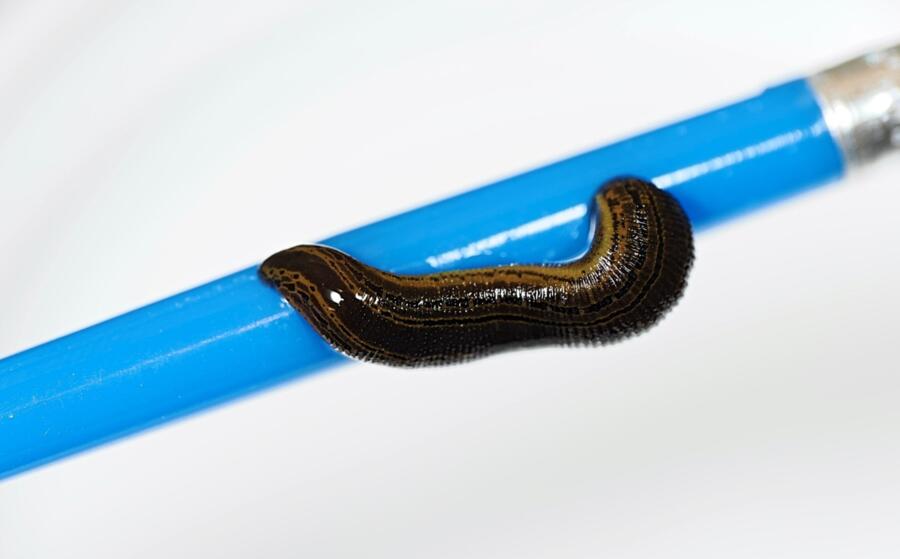

Great suck-cess! Scottish breeding programme sees first baby leeches born
Posted: 22nd November, 2024A project to help restore Scotland’s population of medicinal leeches has welcomed the arrival of the first babies.
Over the past month, twenty of the wriggly juveniles have successfully been hatched at a specially designed facility in Highland Wildlife Park, near Kingussie.
The birth of the babies was only possible thanks to pioneering work done in 2023 to identify, capture and breed a group of the leeches which are rare in the UK and especially so in Scotland, where they are only found in three sites.
Britain’s largest leech species used to be much more prevalent in Scotland but their numbers have plummeted due to habitat loss, pollution, and centuries of humans farming them for use in medicine, in the mistaken belief that bloodletting could cure any number of ailments. They are now only known to be found in three lochs in Scotland: in Argyll, Islay and Dumfries and Galloway.
Royal Zoological Society of Scotland (RZSS) conservation programme manager, Dr Helen Taylor said, “It’s incredibly exciting to see these baby leeches hatching, which is much more than we were expecting at such an early stage in the project.
“As it is the first project of its kind in Scotland, we’ve had to overcome quite a few challenges - from escapes to illnesses – and have adapted the facilities and husbandry to respond to the animals’ needs.
“One of the advantages of doing this kind of work in a zoo facility is that we have an amazing team of expert keepers, field scientists, and vets who have dedicated a huge amount of time and effort to ensure that the animals get the best possible care.
“The babies have all been feeding well and soon we’ll see them begin to go into torpor for the winter, which is a kind of light hibernation that a lot of animals do. If this success continues then eventually, we hope to have enough healthy leeches to begin releasing them into the wild and start new populations in suitable lochs around the country.
“Any releases will be done in partnership with our colleagues from Buglife and Species on the Edge, in consultation with local communities close to release sites.”
Buglife Conservation Director, Craig Macadam said, “Medicinal leeches have an important place in our medical history but are now one of the rarest invertebrates in Scotland.
“The success of the rearing programme at the Highland Wildlife Park is key in securing a strong future for medicinal leeches here.
“As part of the Species on the Edge programme we’ll now work with RZSS, landowners and local communities to establish new populations of this incredible species across the country.”
Related Members
-
News
.png?w=100&h=100&zc=1&f=jpeg&hash=645fe6d42046d4da6bd442a9bf5b2715) New life at Battersea Park Children's Zoo with 20 animal births 24th July, 2026From Critically Endangered wildcat kittens to a rare first-born Patagonian mara pup, Battersea Park Children's Zoo has welcomed 20 new arrivals this…
New life at Battersea Park Children's Zoo with 20 animal births 24th July, 2026From Critically Endangered wildcat kittens to a rare first-born Patagonian mara pup, Battersea Park Children's Zoo has welcomed 20 new arrivals this… -
News
.png?w=100&h=100&zc=1&f=jpeg&hash=7001aa9607698de15099788db8bd2d5d) New Lion Trio Arrives at Belfast Zoo 24th July, 2026Belfast Zoo is delighted to announce the arrival of three young male Northern Lions, marking an exciting milestone in the Zoo’s ongoing commitment…
New Lion Trio Arrives at Belfast Zoo 24th July, 2026Belfast Zoo is delighted to announce the arrival of three young male Northern Lions, marking an exciting milestone in the Zoo’s ongoing commitment… -
News
.png?w=100&h=100&zc=1&f=jpeg&hash=715a0f0b09ee0ae1b88679895c1c6478) Blog: Navigating the job market and the workplace with a disability - my journey 22nd July, 2026Marking Disability Pride Month with Luda Balan with a personal look at navigating life, graduation, and the workforce as a disabled creator:
Blog: Navigating the job market and the workplace with a disability - my journey 22nd July, 2026Marking Disability Pride Month with Luda Balan with a personal look at navigating life, graduation, and the workforce as a disabled creator: