
First ever Henkel’s leaf-tailed geckos hatch at Edinburgh Zoo
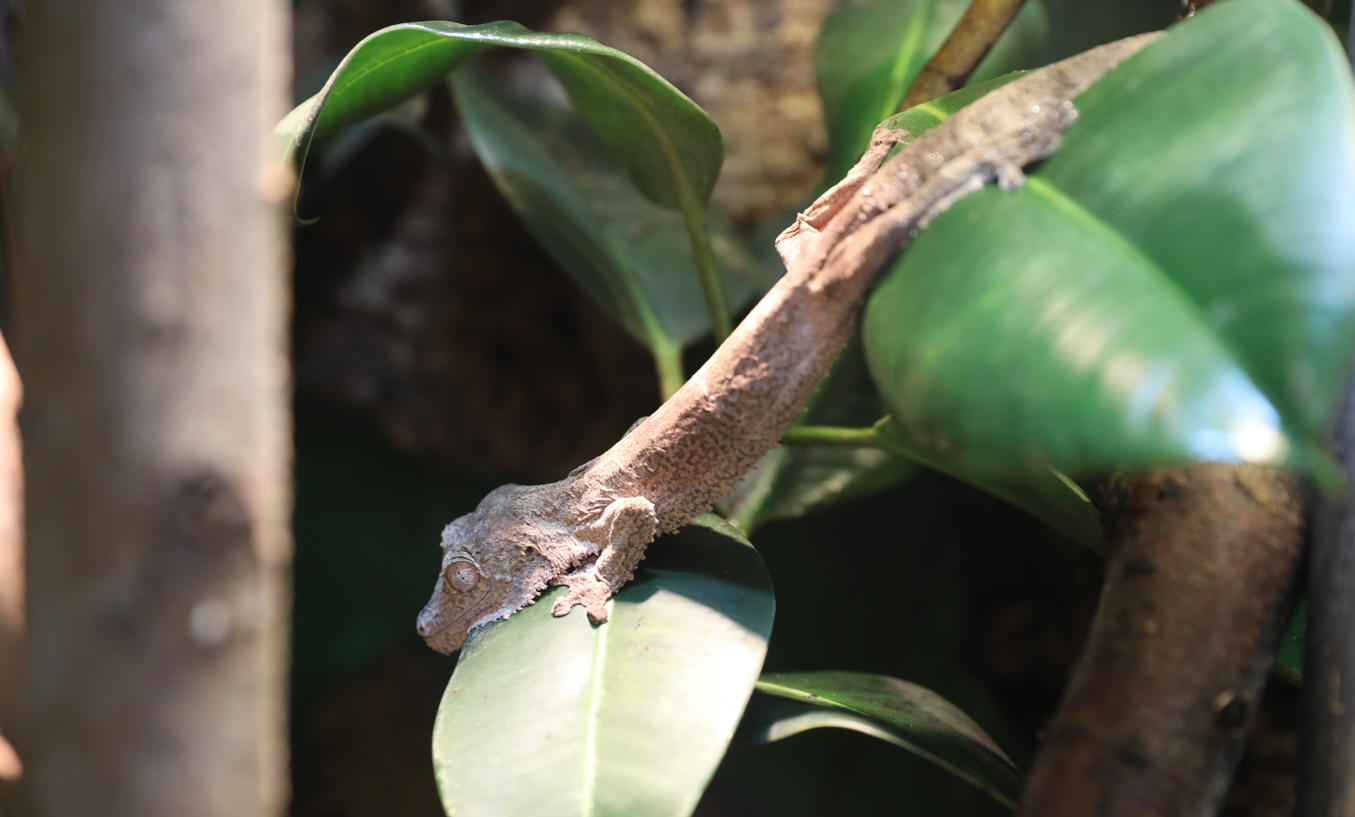
Posted: 21st October, 2023A rare species of gecko has been bred at the Royal Zoological Society of Scotland’s (RZSS) Edinburgh Zoo for the very first time, just in time for Reptile Awareness Day (Saturday 21 October). The two tiny Henkel’s leaf-tailed gecko hatchlings weigh just two grams, which is about the same as a small paper clip.
Keepers at the wildlife conservation charity say the new arrivals are doing well but the first few months are crucial.
Craig Close, senior hoofstock and reptile keeper at Edinburgh Zoo, said “We are thrilled to have successfully hatched two Henkel’s leaf-tailed geckos here at the zoo for the very first time in our charity’s history. The species typically lay between two and four eggs, and females do not care for their young after they hatch.
"We think we have one male and one female, but it is too soon to say for sure. The first few months of their life are critical for their development, so we will be keeping a close eye on our hatchlings at this sensitive time.”
Visitors to the zoo won’t be able to spot the tiny lizards just yet as they will spend the beginning of their lives in an off-show area being monitored by the charity’s keepers. However, their parents can be found in the zoo’s Wee Beasties exhibit.
Henkel’s leaf-tailed geckos are native to Madagascar and identifiable by their unique leaf-shaped tail that helps them camouflage on tree trunks and branches.
Related Members
-
News
.png?w=100&h=100&zc=1&f=jpeg&hash=d8c1f53f2c350a047de7b916ca514ca3) BIAZA Photo Competition 2026 - the winners! 13th August, 2026The wait is over! BIAZA (The British and Irish Association of Zoos and Aquariums) has announced the winners of its annual photo competition, highlighting…
BIAZA Photo Competition 2026 - the winners! 13th August, 2026The wait is over! BIAZA (The British and Irish Association of Zoos and Aquariums) has announced the winners of its annual photo competition, highlighting… -
News
.png?w=100&h=100&zc=1&f=jpeg&hash=326487f1d57ac0eab876b8e79d153670) Accessibility on a Budget: what we've learned at Shaldon Wildlife Trust 11th August, 2026As the zoo which won the 2026 BIAZA Accessibility in Action Award (in partnership with Agility Marketing) Shaldon Wildlife Trust’s Anna Cowen-Hubbard…
Accessibility on a Budget: what we've learned at Shaldon Wildlife Trust 11th August, 2026As the zoo which won the 2026 BIAZA Accessibility in Action Award (in partnership with Agility Marketing) Shaldon Wildlife Trust’s Anna Cowen-Hubbard… -
News
.png?w=100&h=100&zc=1&f=jpeg&hash=b980abd5e6f56a95d9119ccc5a64b796) Thriving Together: Animal Welfare Assessment Across BIAZA Organisations 6th August, 2026In this week's blog, the BIAZA Animal Welfare Working Group details how welfare assessments benefit not only the animal, but staff and organisations…
Thriving Together: Animal Welfare Assessment Across BIAZA Organisations 6th August, 2026In this week's blog, the BIAZA Animal Welfare Working Group details how welfare assessments benefit not only the animal, but staff and organisations…