Camel Calf born at Jimmy's Farm Has a Rocky Start in Life
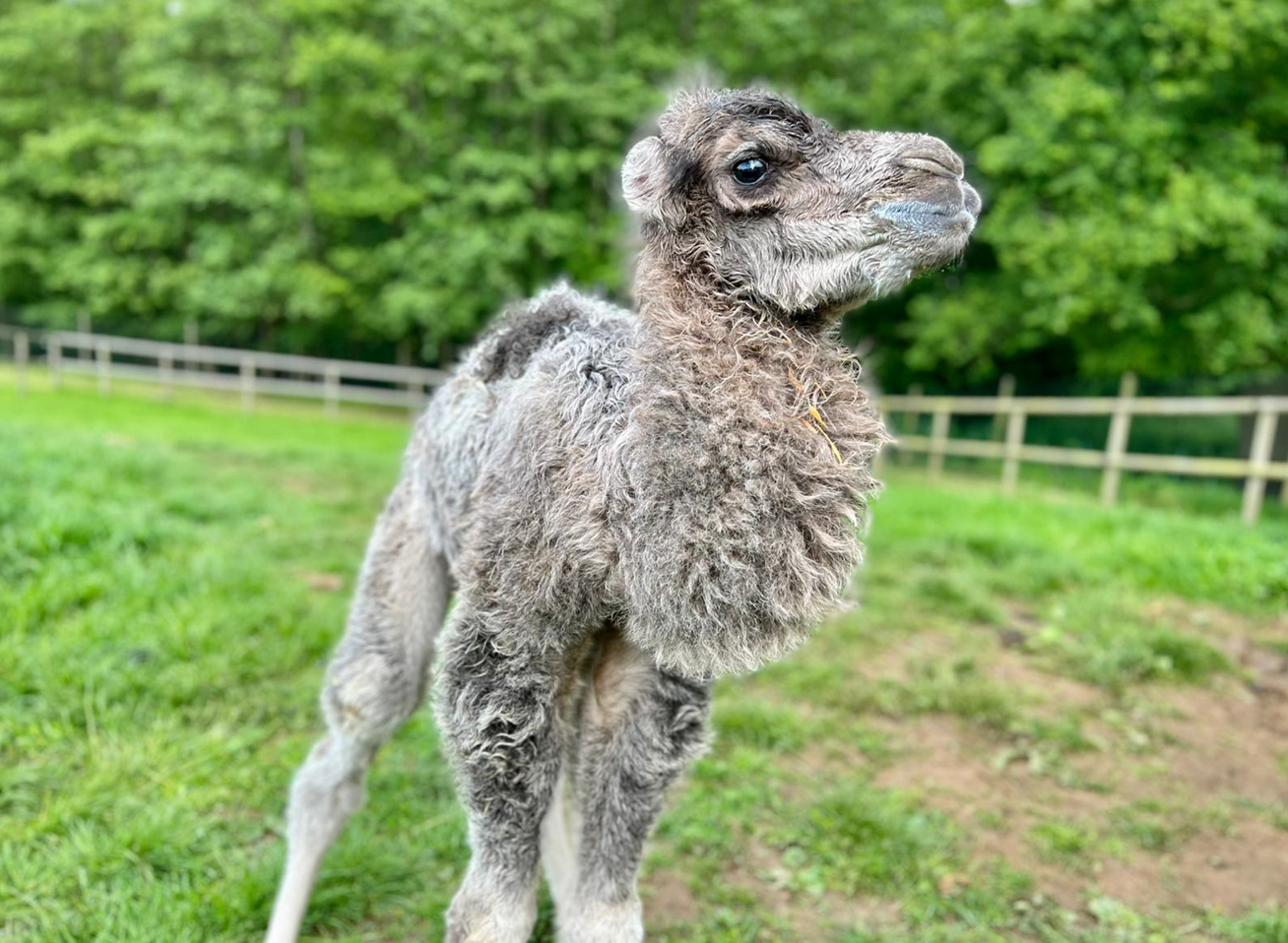
Posted: 25th June, 2022On 31st May 2022 Jimmy’s Farm & Wildlife Park, near Ipswich in Suffolk, welcomed a female Domesticated Bactrian Camel calf.
Unfortunately it wasn’t an easy start to life with a 2.5 hour long birth and Mum, Alice, clearly in pain. The Wildlife Park’s fantastic ranger team tried to help the calf to stand as she struggled. Standing within hours of birth is critical for a camel calf as they need to stand to feed. When the calf did stand Mum, Alice, refused to feed the calf. Upon veterinary the team at JFWP discovered Alice had an infection.
To ensure the calf had the right nutrients the team stepped in to feed the calf while Mum recovered. General Manager Stevie Sheppard said:
“It was a very worrying time at the start when Alice was in pain and we had to step in to feed the calf. I’m so glad Alice recovered quickly and stepped in to the role of Mum like a natural. It’s a joy to watch them play as a family when I drive into work!”
Alice pulled through, with regular vet check-ups and started to show an interest in her calf, allowing her to feed and the team stopped bottle feeding.
Now the whole family are together and a happy family!
The calf has two proud parents, Alice and Arthur who have been at the Wildlife Park for several years now. They are Domesticated Bactrian Camels and their wild counterparts are the only truly wild camels left to exist! Wild Bactrian Camels are unfortunately critically endangered.
Related Members
-
News
.png?w=100&h=100&zc=1&f=jpeg&hash=645fe6d42046d4da6bd442a9bf5b2715) New life at Battersea Park Children's Zoo with 20 animal births 24th July, 2026From Critically Endangered wildcat kittens to a rare first-born Patagonian mara pup, Battersea Park Children's Zoo has welcomed 20 new arrivals this…
New life at Battersea Park Children's Zoo with 20 animal births 24th July, 2026From Critically Endangered wildcat kittens to a rare first-born Patagonian mara pup, Battersea Park Children's Zoo has welcomed 20 new arrivals this… -
News
.png?w=100&h=100&zc=1&f=jpeg&hash=7001aa9607698de15099788db8bd2d5d) New Lion Trio Arrives at Belfast Zoo 24th July, 2026Belfast Zoo is delighted to announce the arrival of three young male Northern Lions, marking an exciting milestone in the Zoo’s ongoing commitment…
New Lion Trio Arrives at Belfast Zoo 24th July, 2026Belfast Zoo is delighted to announce the arrival of three young male Northern Lions, marking an exciting milestone in the Zoo’s ongoing commitment… -
News
.png?w=100&h=100&zc=1&f=jpeg&hash=715a0f0b09ee0ae1b88679895c1c6478) Blog: Navigating the job market and the workplace with a disability - my journey 22nd July, 2026Marking Disability Pride Month with Luda Balan with a personal look at navigating life, graduation, and the workforce as a disabled creator:
Blog: Navigating the job market and the workplace with a disability - my journey 22nd July, 2026Marking Disability Pride Month with Luda Balan with a personal look at navigating life, graduation, and the workforce as a disabled creator: