
Blue-faced honeyeater chicks at Marwell Zoo!
Posted: 4th May, 2023The arrival of a pair of new blue-faced honeyeater chicks is giving guests at Marwell a glimpse at behaviour rarely seen in zoos.
Marwell’s blue-faced honey eaters are the only birds of their species to be found in UK zoos and are particularly notable for the unusual behaviour they exhibit within families.
Dan Garrick, Team Leader – Birds, said: “This species is interesting because juveniles from previous clutches stay with the adult pair to assist in rearing future clutches.
“This behaviour is rarely observed in zoos, but because we leave our honeyeaters together the older juveniles are carrying out this behaviour and are learning important skills in the process.
“The chicks are reared on insects but as they grow, they will eat fruits and nectar too. We provide fresh blossoms throughout spring and summer to stimulate natural behaviours.”
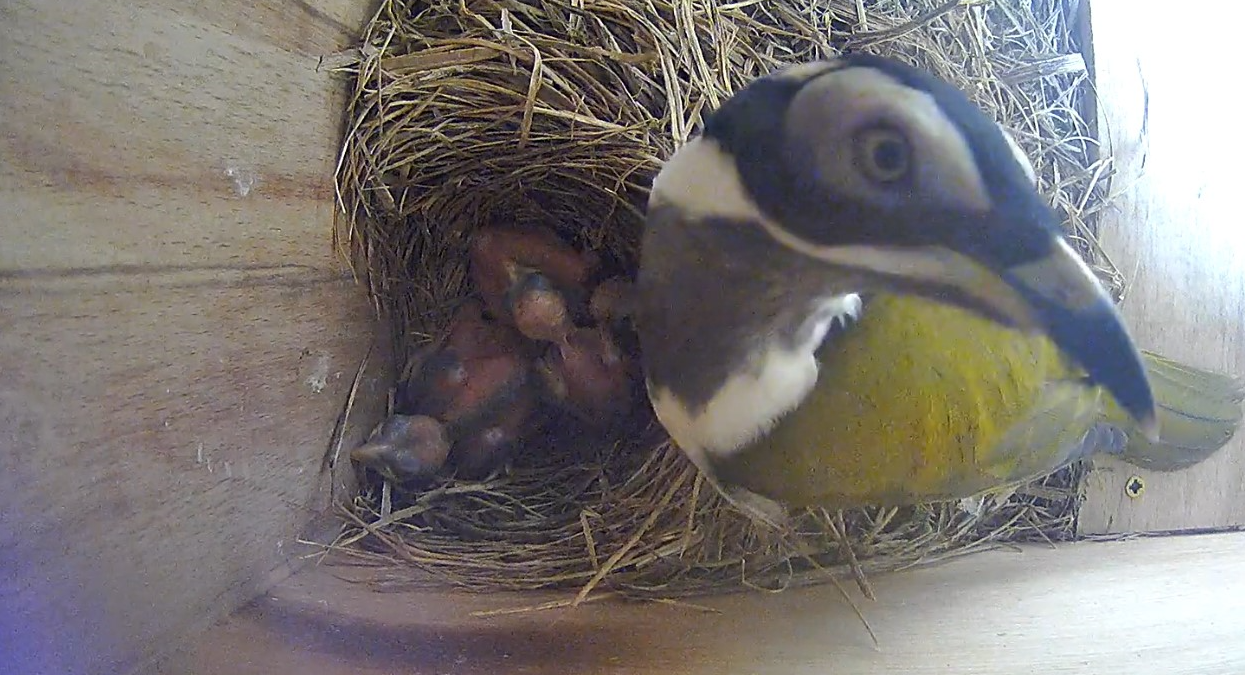
They’ve been able to capture footage of the chicks’ progress thanks to a carefully placed nest cam. The videos also show juveniles from the previous clutch feeding the youngsters.
Blue-faced honeyeaters only gain their distinctive blue facial markings when fully grown. Juveniles can be distinguished by their less vibrant, green facial markings.
Hatchlings stay in the nest for around 23 days and the new arrivals successfully fledged the nest this week so guests may catch a glimpse of them in the Zoo's walk-through aviary.
In the wild, blue-faced honeyeaters can be found in forests and scrubland in south-east and eastern Australia where they enjoy a variety of nectar-rich plants. At Marwell, their enclosure contains eucalyptus and melaleuca plants like those found in their natural habitat.
Honeyeaters have specially adapted tongues with a brush like tip that helps them to eat nectar, a trait that has earned them the affectionate nickname “banana bird” due to their fondness for banana fruit and flowers.
Related Members
-
News
.png?w=100&h=100&zc=1&f=jpeg&hash=d8c1f53f2c350a047de7b916ca514ca3) BIAZA Photo Competition 2026 - the winners! 13th August, 2026The wait is over! BIAZA (The British and Irish Association of Zoos and Aquariums) has announced the winners of its annual photo competition, highlighting…
BIAZA Photo Competition 2026 - the winners! 13th August, 2026The wait is over! BIAZA (The British and Irish Association of Zoos and Aquariums) has announced the winners of its annual photo competition, highlighting… -
News
.png?w=100&h=100&zc=1&f=jpeg&hash=326487f1d57ac0eab876b8e79d153670) Accessibility on a Budget: what we've learned at Shaldon Wildlife Trust 11th August, 2026As the zoo which won the 2026 BIAZA Accessibility in Action Award (in partnership with Agility Marketing) Shaldon Wildlife Trust’s Anna Cowen-Hubbard…
Accessibility on a Budget: what we've learned at Shaldon Wildlife Trust 11th August, 2026As the zoo which won the 2026 BIAZA Accessibility in Action Award (in partnership with Agility Marketing) Shaldon Wildlife Trust’s Anna Cowen-Hubbard… -
News
.png?w=100&h=100&zc=1&f=jpeg&hash=b980abd5e6f56a95d9119ccc5a64b796) Thriving Together: Animal Welfare Assessment Across BIAZA Organisations 6th August, 2026In this week's blog, the BIAZA Animal Welfare Working Group details how welfare assessments benefit not only the animal, but staff and organisations…
Thriving Together: Animal Welfare Assessment Across BIAZA Organisations 6th August, 2026In this week's blog, the BIAZA Animal Welfare Working Group details how welfare assessments benefit not only the animal, but staff and organisations…