

Blog: How can such a mega bat go so unseen?
Posted: 24th October, 2023With only three zoos housing these huge and rare bats, Lucy Edwards (Northumberland Zoo) writes about the unique daytime fruit bat for BIAZA Creatures Unseen...
Livingstone’s fruit bats are the third largest bat in the world, found on two of the Comoros islands, just off of Madagascar. They are classed as Critically Endangered and are in fact the most endangered bat in the world for reasons related to climate change and habitat destruction.
The Comoros islands are not exactly a popular holiday destination and with so few numbers, these bats are rarely seen in the wild. Zoos can play a part in allowing visitors to experience species they may not necessarily have the opportunity to see in the wild and to raise much needed awareness and fundraising for conservation. There are just three zoos that hold Livingstone’s fruit bats; Jersey Zoo, Biotropica and Northumberland Zoo, so it is a very unique animal to see and for the most part goes ‘unseen’.
It’s quite common for zoos to house bats in nocturnal exhibits, which makes sense for some species as they are actually nocturnal. However, mega fruit bats are active during the day too, making them much easier to see. In all three zoos that house Livingstone’s fruit bats, they are exhibited in diurnal, tropical house style exhibits, as this highlights the species in a natural setting that allows them to fly around, wing walk and roost. Visitors can appreciate these wonderful animals and observe their stunning size, beauty - and let’s face it, cuteness.
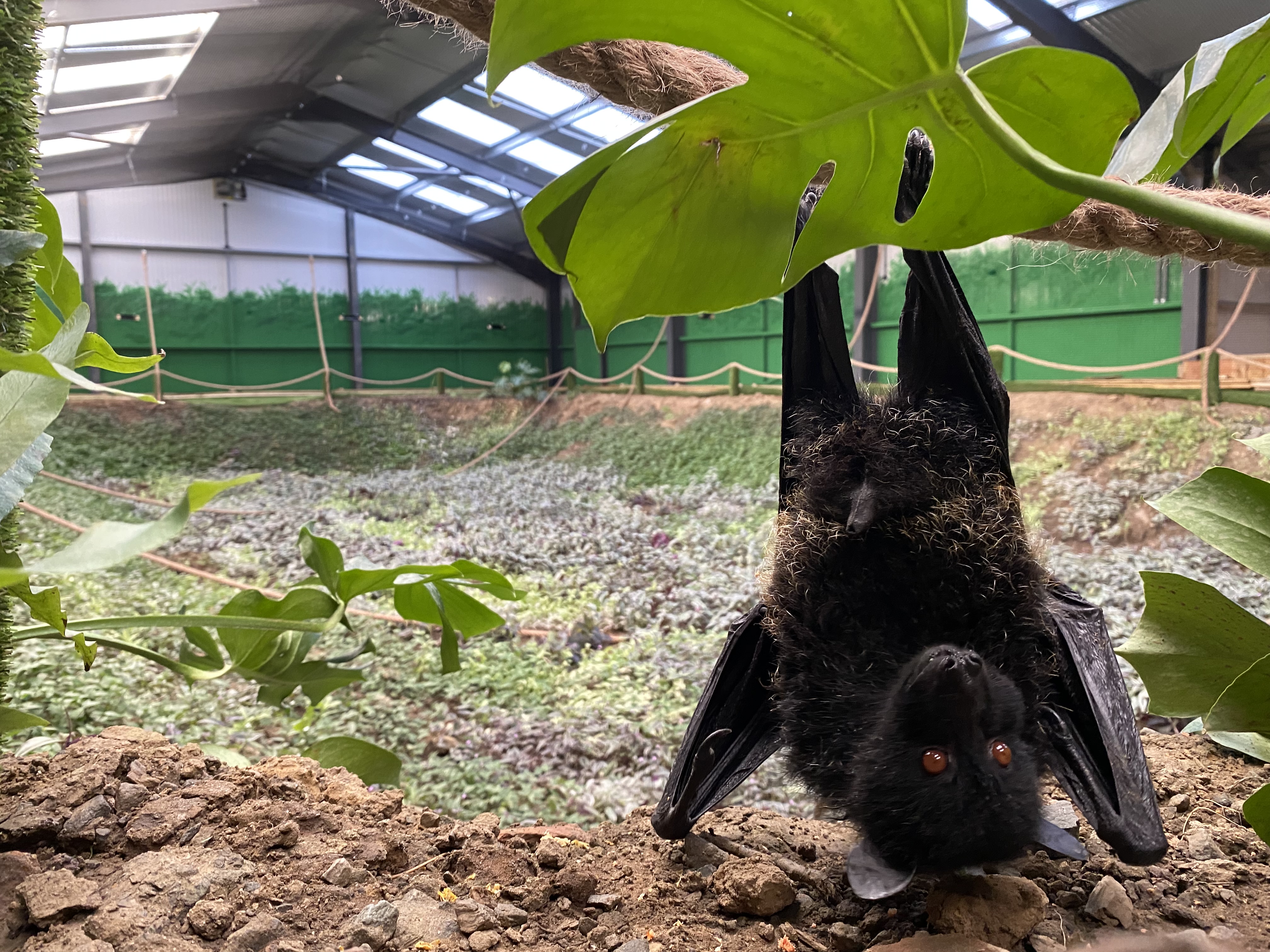
Fruit bats are one of my favourite animals to talk to visitors about because not only are they incredibly interesting animals but the public opinion of bats is often that they will suck your blood or get caught in your hair - thanks Bram Stoker! When visitors enter the fruit bat house, they can often be a little anxious about what they are going to experience and are also a little put off by the smell. As soon as they see the sweet, fox-like faces of the bats and feel the draft from their huge wings, their opinion quickly changes and the smell is soon forgotten.
They begin to take more of an interest and find themselves asking more and more questions about the bats, taking note of the interpretation & giving us the perfect opportunity to raise awareness. Everyone leaves the fruit bat house more excited by a species that often goes unseen. How brilliant is that?!
The fruit bats are also very inquisitive animals and have big characters. As keepers, we get to experience their personalities up close, very close on occasion. One of our boys, Acer, is a bit of an attention seeker and it is not unknown for him to land on you and hitch a ride on your back. Visitors also get to experience the bats inquisitiveness as the viewing area has an open outlook into the bat house where they can fly over or wing walk on the netting directly in front of the public.
Currently this species is going very much unseen but we hope that with more visitors having the opportunity to see these incredible animals up close and with the successful conservation work taking place in the wild, this species will no longer be unseen.
- Lucy Edwards, Curator at Northumberland Zoo
All blogs reflect the views of their author and are not a reflection of BIAZA's positions.
Related Members
-
News
.png?w=100&h=100&zc=1&f=jpeg&hash=a9c00126b17a2a2a60a114638c8dbe92) Blog: keeping members close - why good communication matters 10th September, 2026BIAZA Corporate Associate Romax on why communication is the key ingredient to a good relationship with members: Most membership teams know the feeling.…
Blog: keeping members close - why good communication matters 10th September, 2026BIAZA Corporate Associate Romax on why communication is the key ingredient to a good relationship with members: Most membership teams know the feeling.… -
News
.png?w=100&h=100&zc=1&f=jpeg&hash=aad86ef4c29c1be4f7d49d7ddd0ae3d7) Blog: photo competition ignites my childhood wonder for the natural world 4th September, 2026BIAZA’s Andrew Hall reflects on the success of BIAZA’s 2026 Photography Competition and how it speaks to a lifetime of love for nature… …
Blog: photo competition ignites my childhood wonder for the natural world 4th September, 2026BIAZA’s Andrew Hall reflects on the success of BIAZA’s 2026 Photography Competition and how it speaks to a lifetime of love for nature… … -
News
.png?w=100&h=100&zc=1&f=jpeg&hash=b758c447d510c7c32d3c5afb8454dab2) All Things Wild Launches Six-Year Conservation Strategy and ‘More Than Just Your Local Zoo’ Campaign 1st September, 2026All Things Wild has today launched its first-ever six-year Conservation Strategy alongside a new park-wide campaign, ‘More Than Just Your Local…
All Things Wild Launches Six-Year Conservation Strategy and ‘More Than Just Your Local Zoo’ Campaign 1st September, 2026All Things Wild has today launched its first-ever six-year Conservation Strategy alongside a new park-wide campaign, ‘More Than Just Your Local…