Birth of world’s rarest fruit bat caught on camera at Jersey Zoo
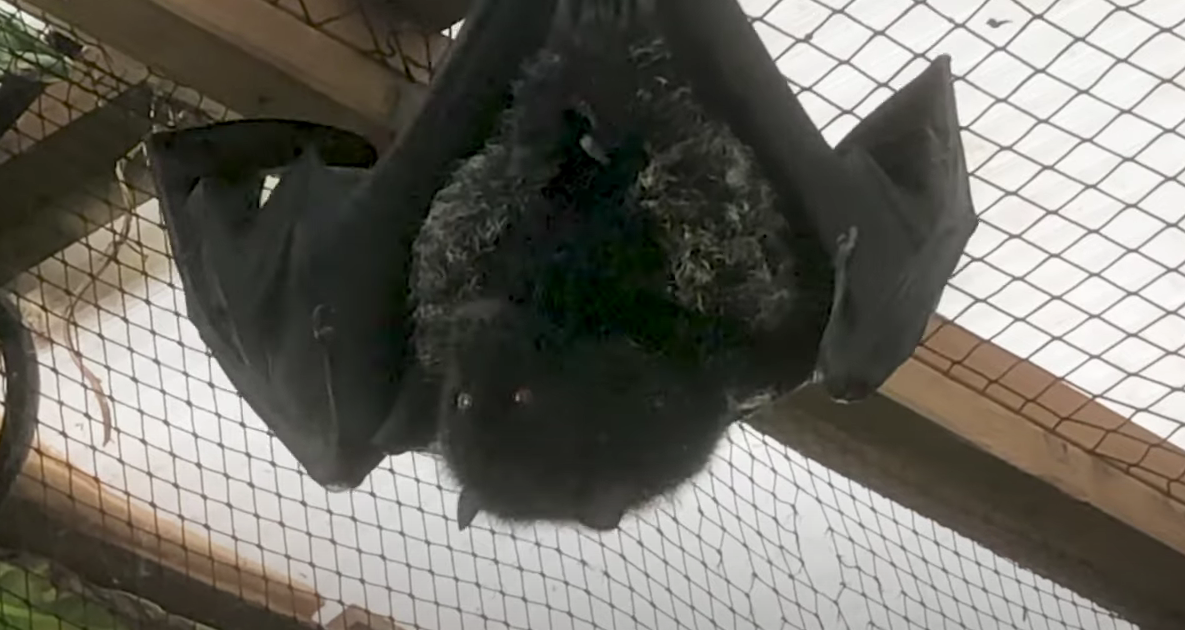
Posted: 25th May, 2023For the first time, Jersey Zoo have captured on camera the birth of the world’s rarest fruit bat. The footage was recorded by Curator of Mammals at Jersey Zoo, Domonic Wormell along with student Ksenia Potapova whilst they were inspecting the mother.
The bat pup, which is still to be named, was born by eight-year-old mother, Nymeria on 27 April 2023. It weighed 50-70g at birth and keepers are happy with how it is progressing. Bat pups generally hang off to their mother until around 2.5 months when they start to fly. It is not until they are one that they become more independent and feed for themselves.
The Livingstone’s fruit bat is critically endangered, so every birth at Jersey Zoo helps secure the future for this unique species. Durrell is a pioneer in the husbandry of these ‘super mammals’ and in 2022 Jersey Zoo had a record-breaking 16 healthy bat pups born into the colony, bolstering the safety net population in case of a disaster in the wild.
In the wild, there are only an estimated 1,300 of the species remaining, mostly due to extensive deforestation that is driving these bats to the edge of extinction. The Livingstone’s fruit bat comes from the Comoro Islands found to the northwest of Madagascar in the Indian Ocean, where there is huge pressure on the bats remaining habitat. The species faces destruction of their forest homes due to human populations spreading across their islands. The zoo’s captive population, which makes up an amazing 90% of the global captive population, serves as an assurance population for this incredibly rare species.
Speaking about the birth, Dom Wormell commented: “Witnessing a bat birth is an incredible experience and the fact that we caught this on camera is amazing. Bats often have a bad reputation, but they are extremely social and caring animals. Mothers form a remarkably close bond with their infant which is wonderful to watch.
Bats are really the most incredible animals and are so important to healthy ecosystems around the world. Hundreds of food plants are dependent on bats for pollination or seed dispersal. In the Comoros Islands where the Livingstone’s fruit bats originate from, the ecosystem has been hugely depleted to the point that 50 % of the waterways have dried up. This has an enormous impact on the human population, as well as the wildlife on the islands. Bats are crucial to bringing back these forests and helping these ecosystems replenish.”
Jersey’s colony of Livingstone's fruit bats live in the Island Bat Roost, which they share with the small but feisty Rodrigues fruit bats. Their 800m2 enclosure, located next to Lemur Lake, allows them to fly non-stop in 100m circles, when they're not hanging out that is!
Related Members
-
News
.png?w=100&h=100&zc=1&f=jpeg&hash=d8c1f53f2c350a047de7b916ca514ca3) BIAZA Photo Competition 2026 - the winners! 13th August, 2026The wait is over! BIAZA (The British and Irish Association of Zoos and Aquariums) has announced the winners of its annual photo competition, highlighting…
BIAZA Photo Competition 2026 - the winners! 13th August, 2026The wait is over! BIAZA (The British and Irish Association of Zoos and Aquariums) has announced the winners of its annual photo competition, highlighting… -
News
.png?w=100&h=100&zc=1&f=jpeg&hash=326487f1d57ac0eab876b8e79d153670) Accessibility on a Budget: what we've learned at Shaldon Wildlife Trust 11th August, 2026As the zoo which won the 2026 BIAZA Accessibility in Action Award (in partnership with Agility Marketing) Shaldon Wildlife Trust’s Anna Cowen-Hubbard…
Accessibility on a Budget: what we've learned at Shaldon Wildlife Trust 11th August, 2026As the zoo which won the 2026 BIAZA Accessibility in Action Award (in partnership with Agility Marketing) Shaldon Wildlife Trust’s Anna Cowen-Hubbard… -
News
.png?w=100&h=100&zc=1&f=jpeg&hash=b980abd5e6f56a95d9119ccc5a64b796) Thriving Together: Animal Welfare Assessment Across BIAZA Organisations 6th August, 2026In this week's blog, the BIAZA Animal Welfare Working Group details how welfare assessments benefit not only the animal, but staff and organisations…
Thriving Together: Animal Welfare Assessment Across BIAZA Organisations 6th August, 2026In this week's blog, the BIAZA Animal Welfare Working Group details how welfare assessments benefit not only the animal, but staff and organisations…